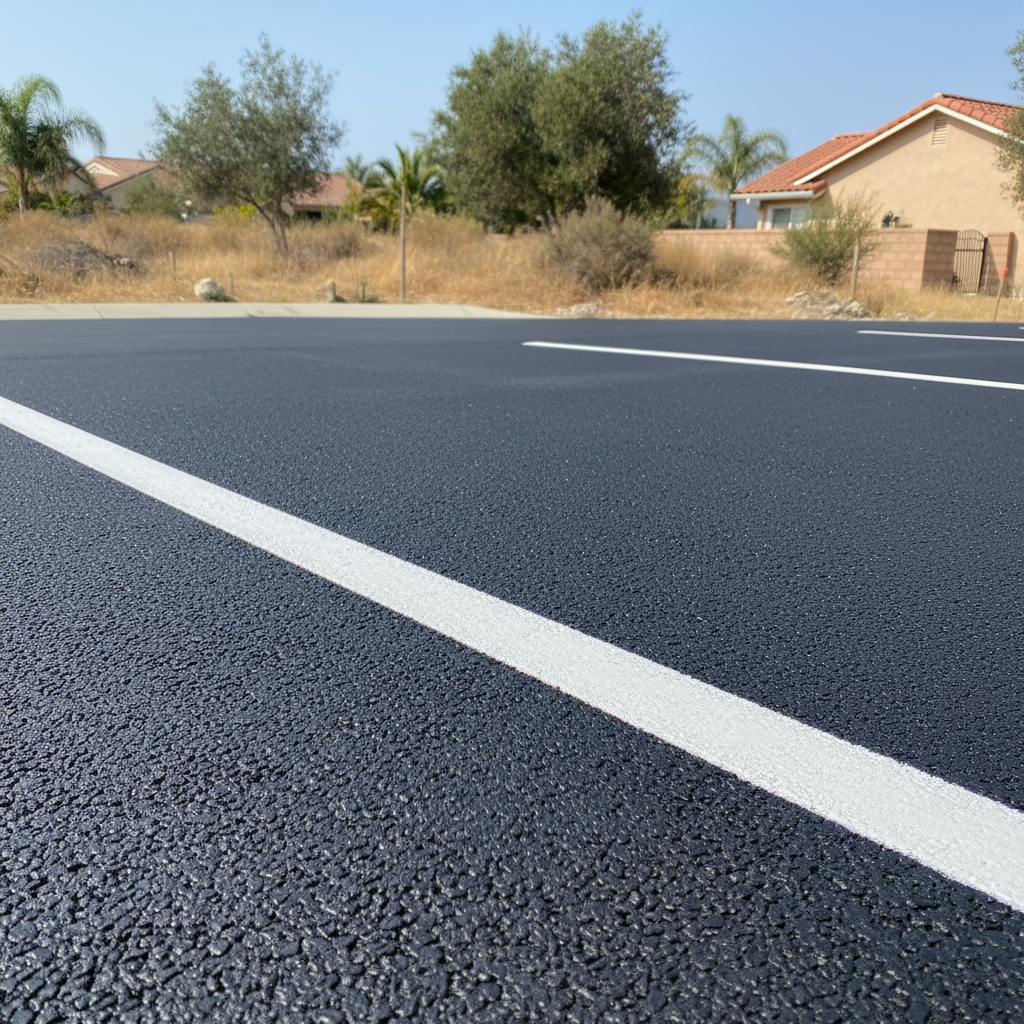
You've got a driveway, a private road, or maybe a shared access lane that needs some attention. Eventually, you're going to think about asphalt striping. It's not just for big parking lots, you know. Homeowners around Laguna Niguel ask me all sorts of questions about it, and I'm happy to clear things up. Here are the most common ones I hear, and my honest answers.
What exactly is asphalt striping for residential properties?
When I talk about asphalt striping for a home, I'm usually talking about painting lines or markings on a paved surface that's part of your property. This could be anything from a long, winding driveway that needs clear edges, to a shared private road that needs lane dividers, or even designating parking spots if you've got a multi-unit property or a large estate with guest parking. It's about safety, organization, and frankly, making your property look a lot tidier and more professional. It's not just about painting; it's about planning the layout so it makes sense for how you and your visitors use the space.
How long does asphalt striping last in our Southern California climate?
That's a big one, especially with our intense sun here in Laguna Niguel. The lifespan of asphalt striping really depends on a few things: the quality of the paint, the preparation of the surface, and the amount of traffic it sees. Good quality, durable traffic paint, often an acrylic or epoxy-based formula, can easily last 2-5 years, sometimes even longer. If the surface isn't cleaned properly before application, or if cheap paint is used, you'll see it fade and chip a lot faster. Areas with constant vehicle turning or heavy foot traffic will wear down quicker than a straight line on a seldom-used part of the driveway. Our strong UV rays are definitely a factor, so I always recommend using paints designed to resist fading.
Do I need to sealcoat my driveway before getting it striped?
Absolutely, yes. Think of it this way: sealcoating is like putting a fresh, protective skin on your asphalt. It fills in small cracks, protects against water and UV damage, and gives you a nice, dark, uniform surface. Striping on top of fresh sealcoat is ideal because the paint adheres much better to that smooth, clean surface. If you stripe directly onto old, unsealed, or cracked asphalt, the paint won't stick as well, and it'll wear off much faster. It's a waste of money to stripe over a surface that's already deteriorating. I always tell folks, sealcoat first, then stripe. Wait at least 24-48 hours after sealcoating before applying any paint, to make sure the sealcoat is fully cured.
What kind of paint do you use, and is it environmentally friendly?
For residential striping, we primarily use water-based acrylic traffic paints. These have come a long way in terms of durability and performance. They're much better for the environment than the older, solvent-based paints because they have low VOC (Volatile Organic Compound) content. This means fewer harmful fumes during application and less impact on air quality, which is something we all appreciate in our coastal community. They dry quickly too, which is a huge plus for minimizing disruption. We make sure the products we use meet local environmental standards and are safe for use around homes and landscaping.
How long does the striping process take, and when can I drive on it?
For most residential jobs, the actual striping process is pretty quick. Once the area is prepped (cleaned, measured, and chalk-lined), the painting itself might only take a few hours, depending on the complexity and size. The drying time is the critical part. Water-based acrylic paints are usually surface-dry to touch within 15-30 minutes, but you really want to give them more time to cure before driving over them. I usually recommend waiting at least 1-2 hours for light traffic, and ideally 24 hours before heavy vehicles or constant turning. We'll always give you a specific timeframe based on the paint used and the weather conditions that day. We don't want you tracking wet paint all over your nice new asphalt!
Can you stripe custom designs or just standard lines?
You bet we can do more than just straight lines! While most homeowners are looking for basic edge lines or parking indicators, we can absolutely do custom designs. Think about things like numbering for parking spots, directional arrows, handicap symbols, or even a custom logo if you have a home business. If you've got a unique layout or a specific need, just talk to me about it. We can usually create stencils for pretty much anything you can imagine. It's all about making your paved areas functional and visually appealing.
What's the cost range for residential asphalt striping?
Pricing for striping can vary quite a bit because every job is different. It's not like buying a gallon of milk. The main factors are the total linear footage of lines needed, the complexity of the layout (straight lines are easier than intricate stencils), the number of colors, and the condition of the surface. If we have to do a lot of cleaning or prep work, that'll factor in. A small, simple driveway might be a few hundred bucks, while a larger private road with multiple markings could be more. The best way to get an accurate quote is to have Coastal Asphalt come out, take a look at your specific project, and give you a detailed estimate. We'll walk you through exactly what you're paying for, no surprises.
Hopefully, this clears up some of the common questions you might have about asphalt striping. It's a small detail that makes a big difference in the appearance and functionality of your property. If you're in Laguna Niguel or the surrounding areas and thinking about getting some lines painted, don't hesitate to give us a call.