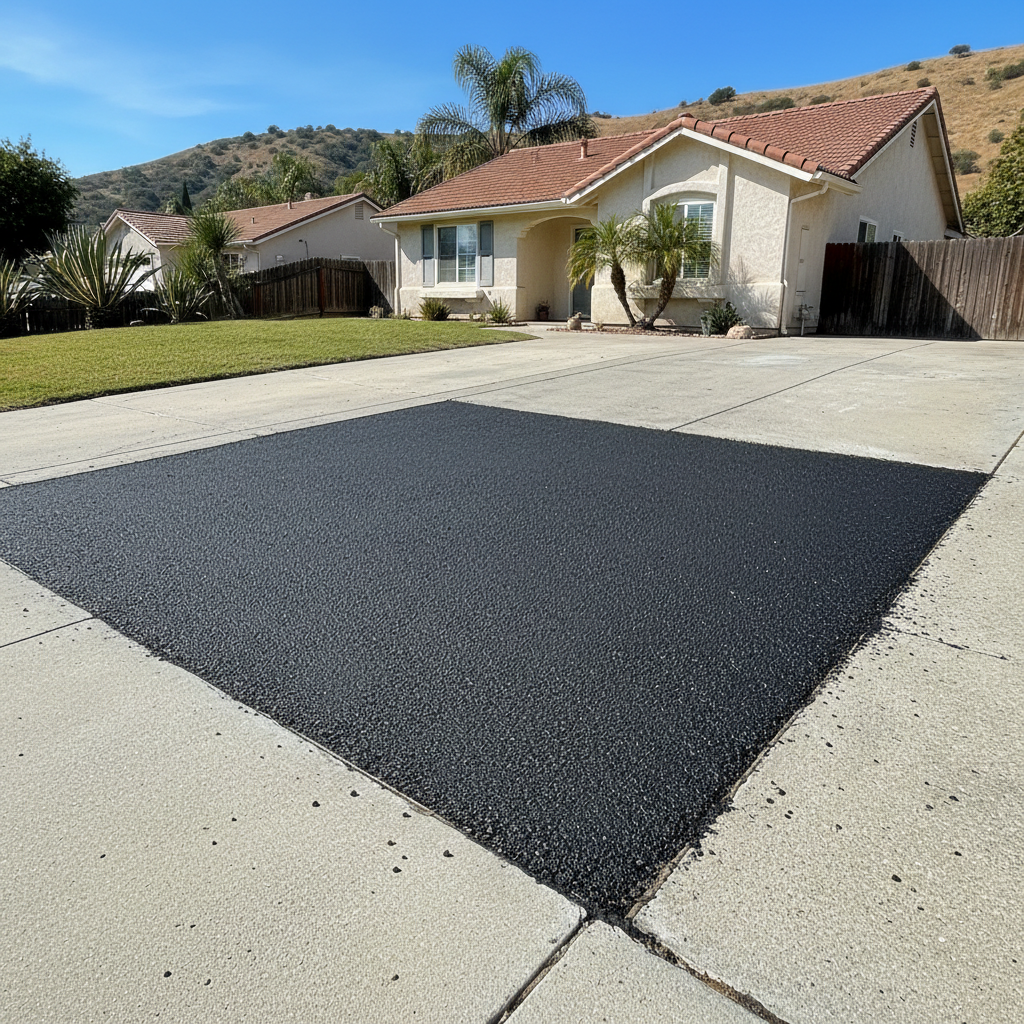
You've got a section of asphalt that's seen better days, right? Maybe it's a pothole that's getting deeper, or a spiderweb of cracks spreading across your driveway or parking lot. You know you need to get it fixed before it turns into a bigger, more expensive problem. But what's it actually going to cost you here in Laguna Niguel?
I'm not going to give you some vague, "it depends" answer. Instead, I'm going to lay out the real factors that drive asphalt patching costs, give you some solid price ranges, and tell you what should be in a good quote. This way, you'll know what to expect and, more importantly, how to make sure you're not getting fleeced.
What Really Drives Patching Costs?
When I'm looking at a patching job, a few things immediately jump out that affect the price. It's not just about the size of the hole, though that's definitely a big one.
- Size and Depth of the Patch: This is the most obvious factor, isn't it? A small, shallow pothole is a lot less work and material than a large, deep section that needs full-depth repair. We measure in square feet, and deeper patches mean more asphalt, more excavation, and more labor.
- Type of Damage: Is it just surface cracking? Or is the base layer compromised? If the sub-base is failing, we're not just patching asphalt; we're digging out and rebuilding the foundation, which adds significantly to the cost. Sometimes, you'll see this in areas where water has collected for a long time, especially with our occasional heavy rains that can really erode things underneath.
- Access and Location: Can I get my equipment right up to the patch? Or is it in a tight spot that requires hand tools and more manual labor? A patch in the middle of a wide-open parking lot is easier than one tucked against a building or a curb, no doubt about it.
- Material Costs: Asphalt prices fluctuate, just like gas. We buy it by the ton, and those prices can change. We always use quality hot mix asphalt for durability, especially with our coastal climate and the wear and tear from salt air.
- Disposal Fees: When we dig out old asphalt, we have to get rid of it properly. Landfill fees aren't cheap, and they're part of the overall cost.
- Prep Work Required: Sometimes, the area around the patch needs extra cleaning, saw-cutting, or even minor drainage adjustments to prevent future issues.
Typical Cost Ranges for Asphalt Patching in Laguna Niguel
Alright, let's talk numbers. Keep in mind these are ranges I see for typical jobs around here. These aren't for massive parking lot overhauls, but for targeted repairs.
- Small, Surface-Level Patches (e.g., 1-5 sq ft, 2-3 inches deep): For these smaller, less complex repairs, you're generally looking at $200 to $450 per patch. This covers the minimum mobilization, materials, and labor. We can't just send a crew out for $50, you know? There's always a baseline cost just to get us to your property, even for a quick fix.
- Medium Patches (e.g., 5-20 sq ft, 3-6 inches deep): As the size and depth increase, the cost per square foot tends to go down slightly, but the overall price goes up. For these, expect something in the range of $15 to $25 per square foot. So, a 10 sq ft patch might be $150-$250. This usually involves saw-cutting, digging out the old material, and laying new asphalt.
- Larger, Full-Depth Repairs (e.g., 20-50+ sq ft, 6+ inches deep, or base repair): When we're talking about bigger sections or areas where the base needs rebuilding, the cost per square foot can range from $25 to $40+ per square foot. This is because it's a more involved process: excavating deeper, potentially adding new aggregate base, compacting it, and then laying the asphalt. A 30 sq ft full-depth repair could easily be $750 to $1,200 or more.
These ranges include labor, materials, equipment, and disposal. Remember, these are averages. A particularly tricky spot in a high-traffic area, like a commercial property on Crown Valley Parkway, might be on the higher end due to traffic control needs.
What Should Be in a Good Quote?
When you get a quote from Coastal Asphalt, or any reputable contractor, it should be clear and detailed. Don't accept a scribbled number on a napkin.
- Clear Scope of Work: It should explicitly state what areas are being patched, their approximate size, and the depth of repair (e.g.,